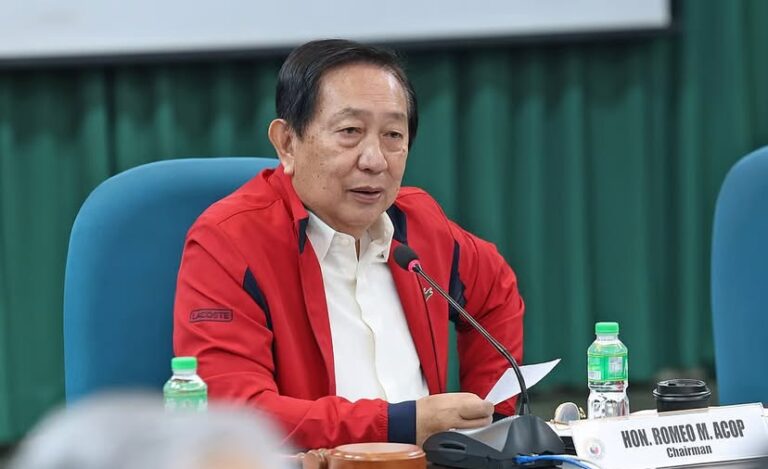
Romeo “Romy” Acop, the elected representative for the 2nd District of Antipolo City and a highly regarded retired police general, departed this life on Saturday night, December 20, 2025, at the age of 78. His unexpected demise marked the conclusion of an extensive and notable career in public service, which incorporated many years of involvement in law enforcement and national governance.
Official accounts indicate that Acop experienced a heart attack at his residence. This medical crisis took his family and colleagues by surprise, particularly since he had successfully undergone a kidney transplant on November 28, 2025. After that surgery, he was reported to be recuperating effectively and exhibiting positive signs of recovery, rendering his death even more unforeseen.
On December 20, at approximately 10:12 p.m., Acop was discovered on the floor of his home by both his duty nurse and his youngest daughter. Immediate emergency protocols were enacted, and he was swiftly transported to Assumption Specialty Hospital and Medical Center. Despite the medical team’s efforts, he was declared deceased at 10:56 p.m. The official cause of death was subsequently identified as a heart attack.
Acop was widely recognized for his principles, discipline, and dedication to public accountability. Within Congress, he developed a reputation as a thorough and principled legislator. He was a key member of the House “Quad Committee,” which oversaw high-profile inquiries into extrajudicial killings, illegal drugs, and Philippine Offshore Gaming Operators (POGOs). His experience in law enforcement provided him with a precise and systematic manner during hearings, and his strategic questioning was often credited with enhancing the integrity of congressional investigations.
Prior to his political career, Acop had a formidable tenure within the Philippine National Police (PNP). He held various significant leadership positions, most notably as the head of the Criminal Investigation and Detection Group (CIDG). In this role, he was actively engaged in significant criminal probes and was recognized for promoting professionalism and discipline within the police force. His shift from law enforcement to legislative work was regarded as a natural extension of his lifelong dedication to public safety and justice.
About the Author